HISTORIC CONTROVERSY
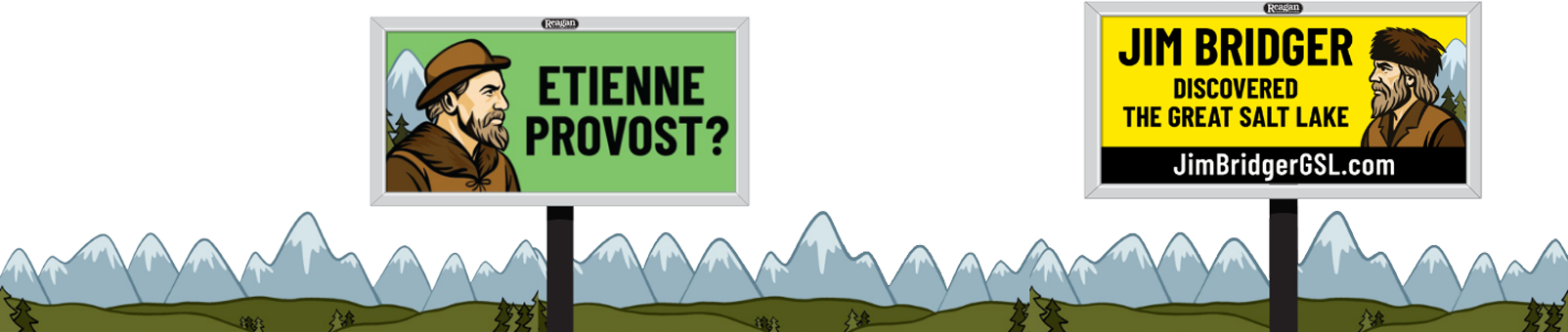
In the fall of 1824, Jim Bridger navigated the Bear River to its mouth and floated into the Great Salt Lake, which he initially mistook for an arm of the Pacific Ocean.
Etienne Provost, a Frenchman operating out of Santa Fe under Mexican license, entered Utah in 1824 by way of the Green River country. He made his way to the Wasatch Front and very possibly may have entered the Salt Lake Valley. If this is so, he would have seen the lake before Jim Bridger.
Provost’s party was attacked by a band of Snake Native Americans in the fall of 1824, and most of the men were killed. Provost and the other survivors escaped and made their way to the Green River in eastern Utah, where they spent the winter at the mouth of the White River. The actual location of this attack remains uncertain but is thought by most historians to have been on the Provo, Jordan, or Weber rivers. If the incident occurred on the Jordan or Weber River, it could be maintained that Provost discovered the Great Salt Lake that fall, before Bridger. Early historians stated that the encounter occurred on the Provo River and that Provost escaped across the Wasatch to the Green River area—thus, he was forty miles south of discovering the Great Salt Lake.
Despite the controversy, Bridger remains the documented discoverer of the Great Salt Lake.